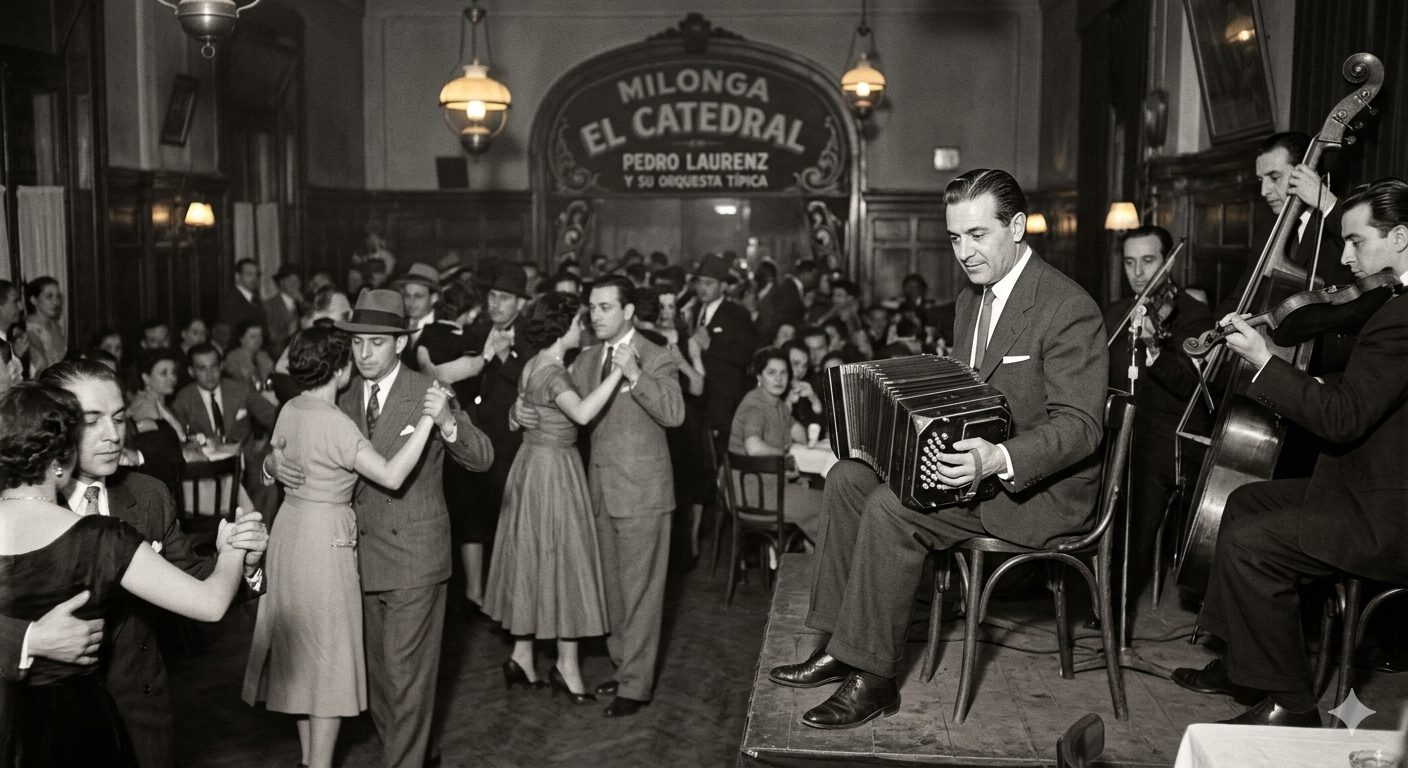
ロレンス楽団の紹介〜バンドネオンの巨匠・カデネロ〜
Pedro Laurenz Orchestra ~Cadenero, Master of the Bandoneón~
La Orquesta de Pedro Laurenz ~Cadenero, Maestro del Bandoneón~
👑 ペドロ・ロレンスとは?
日本語
ペドロ・ロレンス(本名ペドロ・ブランコ・アコスタ、1902年10月10日〜1972年7月7日)はバンドネオン奏者・楽団指揮者・作曲家として、タンゴ史上最も偉大な5人のバンドネオン奏者のひとりに数えられる巨匠です。 el-recodo.com
ロレンスのバンドネオンは「カデネロ」と呼ばれる独特の演奏スタイルを確立し、その力強い音色と感情的なフレージングはアニバル・トロイロやオスバルド・ルジェーロなど後世の巨匠たちに多大な影響を与えました。 el-recodo.com
「Como dos extraños」や「Milonga de mis amores」のメロディーだけで、タンゴ界最高の作曲家のひとりとして名を刻むのに十分な存在です。 LETRAS
English
Pedro Laurenz (real name Pedro Blanco Acosta, October 10, 1902 – July 7, 1972) was a bandoneonist, orchestra leader, and composer counted among the five greatest bandoneonists in tango history. el-recodo.com His distinctive playing style called “cadenero” established a whole school of bandoneon execution, and his powerful sound and emotional phrasing had a profound influence on later masters including Aníbal Troilo and Osvaldo Ruggiero. el-recodo.com
Español
Pedro Laurenz (nombre real Pedro Blanco Acosta, 10 de octubre de 1902 – 7 de julio de 1972) fue un bandoneonista, director de orquesta y compositor contado entre los cinco mejores bandoneonistas de la historia del tango. el-recodo.com
📅 年表 / Chronology / Cronología
日本語
- 1902年10月10日 ブエノスアイレス・ラ・ボカに誕生
- 1916年 バイオリンの勉強を始める
- 1917年 モンテビデオへ移住・兄弟からバンドネオンを習う
- 1918年 ブエノスアイレスに戻りエドゥアルド・アロラスの楽団に参加
- 1922年 ラジオ・クルトゥーラ開局記念演奏に参加
- 1924年 最初の作品「La revancha」を発表
- 1925年 フリオ・デ・カロのセクステットに参加
- 1926年 ペドロ・マフィアとの伝説的バンドネオンデュオを結成
- 1930年 カルロス・ガルデルの映画「ブエノスアイレスの灯」に出演
- 1934年 自身の楽団を結成・カフェ「ロス36ビジャーレス」でデビュー
- 1937年 黄金期の開始を告げる「Arrabal」を録音
- 1943年 アルベルト・ポデスタが楽団に加入
- 1953年 楽団を解散
- 1958年 キンテート・レアル(クインテット・レアル)を結成
- 1972年7月7日 ブエノスアイレスにて逝去。享年69歳
English
- October 10, 1902 Born in La Boca, Buenos Aires
- 1916 Begins studying violin
- 1917 Moves to Montevideo, learns bandoneón from brothers
- 1918 Returns to Buenos Aires, joins Eduardo Arolas’ orchestra
- 1922 Participates in inaugural broadcast of Radio Cultura
- 1924 Presents first composition “La revancha”
- 1925 Joins Julio De Caro’s sextet
- 1926 Forms legendary bandoneón duo with Pedro Maffia
- 1930 Appears in Carlos Gardel’s film “Luces de Buenos Aires”
- 1934 Forms own orchestra, debuts at Café Los 36 Billares
- 1937 Records “Arrabal,” marking the beginning of the Golden Age
- 1943 Alberto Podestá joins the orchestra
- 1953 Dissolves orchestra
- 1958 Forms the legendary Quinteto Real
- July 7, 1972 Passes away in Buenos Aires at age 69
Español
- 10 de octubre de 1902 Nace en La Boca, Buenos Aires
- 1917 Se muda a Montevideo, aprende bandoneón de sus hermanos
- 1925 Se une al sexteto de Julio De Caro
- 1926 Forma el legendario dúo de bandoneones con Pedro Maffia
- 1934 Forma su propia orquesta
- 1937 Graba “Arrabal”, marcando el inicio de la Época de Oro
- 1958 Forma el legendario Quinteto Real
- 7 de julio de 1972 Fallece en Buenos Aires a los 69 años
🎻 音楽的特徴 / Musical Characteristics
日本語
ペドロ・ロレンスのバンドネオンは「カデネロ」と呼ばれる独特のスタイルで知られています。両手を均等かつ独立して使いこなす技術、輝かしい音色、力強いタッチ、そして情熱的なフレージングが特徴です。 Wikipedia
ロレンスはタンゴ演奏の一流の技術者として、鋭いフレージング、輝かしい音響、気質的な力強さ、そしてシンコペーションの効果を楽団に浸透させました。彼が生み出した演奏の流派は、トロイロやルジェーロなど後続の偉大な奏者たちの礎となりました。 SonicHits
English
Pedro Laurenz’s bandoneón is known for its distinctive “cadenero” style — characterized by equal and independent use of both hands, brilliant sound, powerful touch, and passionate phrasing. Wikipedia Laurenz brought incisive phrasing, brilliant sonority, temperamental strength, and syncopation effects to his orchestra. The school of execution he founded became the foundation for later greats including Troilo and Ruggiero. SonicHits
Español
El bandoneón de Pedro Laurenz es conocido por su distintivo estilo “cadenero” — caracterizado por el uso igual e independiente de ambas manos, sonido brillante, toque poderoso y fraseo apasionado. Wikipedia
🎤 ボーカリストの変遷 / Vocalists
日本語
| 期間 | ボーカリスト | 特徴 |
|---|---|---|
| 1937〜1941年 | ホアン・カルロス・カサス | 楽団初期の代表的歌手 |
| 1941〜1942年 | エクトル・ファレル | 情感豊かな表現力 |
| 1943〜1944年 | アルベルト・ポデスタ | 最も人気の高い歌手・「Alma de Bohemio」で名声 |
| 1944年 | マルティン・ポデスタ | アルベルトの後任 |
| 1944〜1945年 | カルロス・ベルムデス | 深みのある歌声 |
| 1952〜1953年 | アルフレド・デル・リオ | 晩年の楽団を支えた歌手 |
English
| Period | Vocalist | Feature |
|---|---|---|
| 1937-1941 | Juan Carlos Casas | Representative early vocalist |
| 1941-1942 | Héctor Farrel | Rich emotional expression |
| 1943-1944 | Alberto Podestá | Most popular vocalist, famous for “Alma de Bohemio” |
| 1944 | Martín Podestá | Successor to Alberto |
| 1944-1945 | Carlos Bermúdez | Deep resonant voice |
| 1952-1953 | Alfredo Del Río | Vocalist of later years |
Español
| Período | Vocalista | Característica |
|---|---|---|
| 1937-1941 | Juan Carlos Casas | Vocalista representativo inicial |
| 1941-1942 | Héctor Farrel | Rica expresión emocional |
| 1943-1944 | Alberto Podestá | El más popular, famoso por “Alma de Bohemio” |
| 1944-1945 | Carlos Bermúdez | Voz profunda y resonante |
| 1952-1953 | Alfredo Del Río | Vocalista de los últimos años |
🎵 代表曲 / Representative Works
日本語
| 曲名 | 種類 | 特徴 |
|---|---|---|
| Milonga de mis amores | 器楽 | ロレンスの代名詞的傑作ミロンガ |
| Como dos extraños | 声楽 | 哀愁漂う別れの名曲 |
| Alma de Bohemio | アルベルト・ポデスタ | ポデスタを代表する名曲 |
| Mala junta | 器楽 | フリオ・デ・カロとの共作 |
| Amurado | 器楽 | ペドロ・マフィアとの共作 |
| Berretín | 器楽 | ロレンス作曲の器楽代表作 |
English
| Song Title | Type | Feature |
|---|---|---|
| Milonga de mis amores | Instrumental | Laurenz’s signature milonga masterpiece |
| Como dos extraños | Vocal | Melancholic farewell masterpiece |
| Alma de Bohemio | Alberto Podestá | Masterpiece that defined Podestá’s career |
| Mala junta | Instrumental | Co-composed with Julio De Caro |
| Amurado | Instrumental | Co-composed with Pedro Maffia |
| Berretín | Instrumental | Representative instrumental composition |
Español
| Título | Tipo | Característica |
|---|---|---|
| Milonga de mis amores | Instrumental | Obra maestra de milonga característica de Laurenz |
| Como dos extraños | Vocal | Obra maestra melancólica de despedida |
| Alma de Bohemio | Alberto Podestá | Obra maestra que definió la carrera de Podestá |
| Mala junta | Instrumental | Co-compuesta con Julio De Caro |
| Amurado | Instrumental | Co-compuesta con Pedro Maffia |
| Berretín | Instrumental | Composición instrumental representativa |
🌟 キンテート・レアルの結成 / Formation of Quinteto Real
日本語
1958年にロレンスはホラシオ・サルガン(ピアノ)、エンリケ・マリオ・フランシーニ(バイオリン)、ウバルド・デ・リオ(ギター)、ラファエル・フェロ(コントラバス)とともに伝説の「キンテート・レアル(クインテット・レアル)」を結成しました。 SonicHits
タンゴが衰退期を迎える中でも、このクインテットは世界中で公演を行い、日本にも2度訪問して現地のファンを魅了しました。 SonicHits
English
In 1958, Laurenz formed the legendary Quinteto Real with Horacio Salgán (piano), Enrique Mario Francini (violin), Ubaldo De Lío (guitar), and Rafael Ferro (double bass). SonicHits Even as tango entered its decline, this quintet performed worldwide, visiting Japan twice to captivate local audiences. SonicHits
Español
En 1958, Laurenz formó el legendario Quinteto Real con Horacio Salgán (piano), Enrique Mario Francini (violín), Ubaldo De Lío (guitarra) y Rafael Ferro (contrabajo). SonicHits
🎬 カルロス・ガルデルとの縁 / Connection with Carlos Gardel
日本語
1930年にロレンスはフリオ・デ・カロとともにカルロス・ガルデルの映画「ブエノスアイレスの灯」に出演しました。その映画の中でガルデルが「トモ・イ・オブリゴ」を歌うシーンに、デ・カロとロレンスが「エキストラ」として参加したことは、タンゴ史に残る感動的な場面として語り継がれています。 Hermano Tango
English
In 1930, Laurenz appeared with Julio De Caro in Carlos Gardel’s film “Luces de Buenos Aires.” The scene where Gardel sang “Tomo y obligo” with De Caro and Laurenz appearing as extras remains one of the most moving moments in tango history. Hermano Tango
Español
En 1930, Laurenz apareció con Julio De Caro en la película de Carlos Gardel “Luces de Buenos Aires.” La escena donde Gardel cantó “Tomo y obligo” con De Caro y Laurenz apareciendo como extras sigue siendo uno de los momentos más emotivos de la historia del tango. Hermano Tango
💃 ダンサーへのメッセージ / Message for Dancers
日本語
ロレンスの音楽はタンゴの中でも特に深みと技術的な精緻さを持っています。特にMilonga de mis amoresはミロンガで流れると会場全体が躍動感に包まれる、ミロンガセクションの定番中の定番です。またアルベルト・ポデスタとの録音は、ボーカルタンゴの美しさを余すことなく表現した傑作として今も多くのダンサーに愛されています。
English
Laurenz’s music holds a special place in tango for its depth and technical refinement. Milonga de mis amores in particular is an absolute staple of the milonga section — when it plays, the entire venue comes alive with energy. His recordings with Alberto Podestá remain masterpieces of vocal tango that continue to be beloved by dancers worldwide.
Español
La música de Laurenz ocupa un lugar especial en el tango por su profundidad y refinamiento técnico. Milonga de mis amores es un clásico absoluto de la sección de milonga. Sus grabaciones con Alberto Podestá siguen siendo obras maestras del tango vocal amadas por bailarines de todo el mundo.
コメント